
How to Remove Wax From Cross-Country Skis
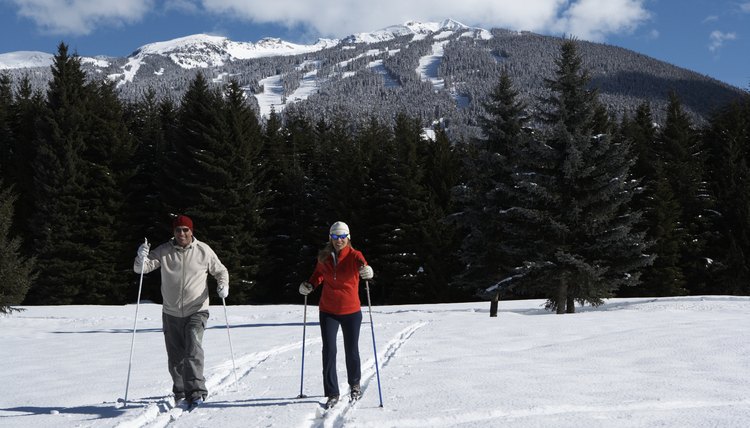
Before applying fresh wax to cross-country skis, it is necessary to remove the old wax that may have accumulated dirt and buildup. There are two types of cross-country ski wax required: glide wax to enable the ski to glide smoothly over the snow, and kick wax -- used only on the kick zone -- which provides traction. The proper removal of glide and kick wax, and general maintenance of skiing equipment, enhances the enjoyment of this sport.
Glide Wax Removal
Rest the skis, upside down, on a tuning bench. If a tuning bench is not available, use two chairs. Using paper towels, quickly wipe down the skis to remove any loose dirt or residue.
Scrape the skis with a plastic scraper. Do not press too hard, as the ski base can be marred by the scraper when too much pressure is used. Keep two hands on the scraper and scrape at a 45-degree angle to the skis. Always scrape from the tip to the tail of the ski so that any micro hairs lifted will rest in the same direction that the skis are used.
Brush the ski base, using a fine copper brush, from tip to tail. Use short quick strokes in one direction. Brushing opens up the ski base, releasing old wax and dirt, and allowing better penetration of new wax. Do not brush over the kick zone.
Apply a soft wax to the surface of the ski base. Heat the wax with a wax iron at low to medium heat. Heat until only the wax is melted. Do not heat up the ski enough that the wax gets absorbed into the ski. In other words, the wax should be heated, but the heat should not reach down to the ski. Never stop moving the iron to avoid overheating.
Remove the excess wax with a plastic scraper while the wax is still soft and warm. Let the skis cool to room temperature. Scrape one more time to remove any additional wax that releases in the cooling process.
Brush one more time, tip to tail, with the copper brush. Apply new glide wax based on the expected snow conditions of your next run.
Kick Wax Removal
Scrape as much of the kick wax off as possible using a plastic scraper and conservative pressure. Run down one side of the groove, then the other, to remove all excess kick wax.
Dampen a paper towel with the wax remover solution. Run the paper towel along the kick zone only, to remove remaining wax and dirt. Refer to the specific instructions of the wax remover solution for the amount of time to allow the remover to rest on the ski base before wiping it clean.
Wipe off all remaining wax cleaner with a clean paper towel. Let the ski dry completely.
Lightly sand the kick zone with sandpaper and wipe the excess with a dry paper towel. Your kick zone is now ready for new kick wax.
Tips
Research the different types of wax available and refer to your skis' manufacturer for the types of wax required for your skis.
Skis should be waxed based on the snow conditions that they will be used on, so properly prepare for your next run by waxing accordingly.
Always brush and scrape from the tip to the tail of the ski.
Warnings
Respect the integrity of the skis by handling them with care at all times.
When heating wax with the iron, make sure you are in a well-ventilated room. Use safety precautions around the hot iron.
Writer Bio
Based in Annapolis, Md., Kate Hickman has been involved with sports management since graduating from Vanderbilt University in 2006. Author of a holistic recruiting manual for high school athletes, a monthly e-publication through her business, Balance Lacrosse, and a monthly contributor to Lacrosse Magazine, Hickman has a thorough understanding of all things sports.