
How Did Native Americans Make Bow and Arrows?
There were at least four successive waves of bow and arrow used by Native Americans, or Native American Indians, in North America. Herbert Maschner, archaeologist at Idaho State University, documents the earliest wave around 12,000 years ago, in southern Alaska. Although spears and atlatls, devices used to propel spearlike darts long distances, were occasionally used at the same time, in many places they were replaced by the more recent technology of bows and arrows as the technology spread across the continent. For example, archaeological evidence reveals that by A.D. 500, Native American bows and arrows, or archery devices, were being used in what is now Iowa.
Making a Bow
Most Native Americans used locally available materials for their bows that were easy to work and would hold up to frequent use. Bows were made of various types of wood able to repeatedly flex when pulled, without becoming brittle or cracking. Some of the most frequently used woods were Osage orange, ash, hickory and juniper. A piece of wood, commonly around 1 yard long, was shaped to have a thickened grip in the middle, with thinner, more flexible limbs and notches at the ends to hold the string in place. The shaping was done with stone, bone or, later, metal knives. These can be considered longbows or short bows, composite bows or Native American bows. Different Native American tribes, Indian tribes, or North American native tribes, could have had different uses of the bows, depending on the region. For example, some were used for small game and others for larger game, and different groups of tribes, like Plains Indians, could have used the bow and arrows differently.
Making a String
Bowstrings were made from gut, rawhide, sinew or plant fiber, and often removed from the bows when not in use. The animal products were carefully cut from a carcass into thin strips, scraped and dried, and sometimes braided for extra strength. Arrow makers also sometimes used plant fibers, such as the inner bark of basswood or cordage made from milkweed, nettle or Indian hemp. Plant fiber strings were harder to make into bow strings, but they resisted stretching due to humidity and were therefore more reliable and generally preferred when adequate sources were available. The string was attached to the notches at both ends of the bow; when pulled taut and released, it would propel the arrow forward with great accuracy and force. Different string materials could be used for different draw weights in Indian bows or Native American bow strings.
Making an Arrow
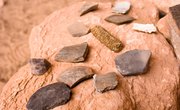
Arrow shafts were made from straight shoots from trees such as black locust, dogwood, ash and birch. Native Americans shaved, sanded or heated and bent them straight, if needed. They chipped, or knapped, arrowheads from materials such as chert, flint or obsidian. However, steel and copper arrowheads became increasingly common after Europeans began to trade metal items to the Native Americans in return for furs. They were often attached to a split in the end of the arrow shaft with a combination of hide glue, or pitch and sinew. Fletchings of buzzard or turkey feathers, attached to the shaft with sinew or hide glue, improved the arrow's accuracy in flight.
Variation in Technique and Materials
Native Americans employed diverse natural materials to meet a wide variety of needs, and constructed different types of bows and arrows depending on the intended use. For example, a bow to be used on the open plains for hunting buffalo would be longer and thicker than one to be carried through densely wooded forests for hunting birds. Some arrows had a thin tether line attached and were used for shooting fish and pulling them from the water. Certain types of wood performed better in hot, dry weather, while other varieties gave better results in damp environments. Native American bow and arrow making varied by region and background culture of each tribe. For example, North American tribes could have differed from those in South America in their use of the bows and arrows.