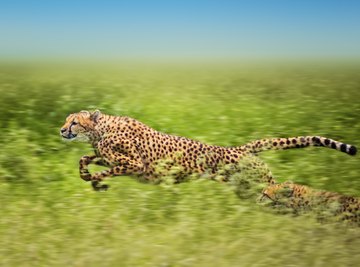
Cheetahs are well known for their speed, which can reach up to 70 miles per hour. But there is more to these creatures than quickness. Cheetahs, which are found primarily in the open plains, woodlands and semi-desert areas of southern and eastern Africa, have other fascinating habits and characteristics which make them unusual.
Physical Characteristics
Cheetahs have distinctive spots and black, tear-shaped stripes that stretch from the inner corner of each eye to the mouth. Cheetahs have small rounded heads, long necks, deep chests and claws that are non-retractable. The legs of the cheetah are long, slim and muscular. These factors allow the animal to travel at exceptional rates of speed. The special pads on their feet help create traction for the animal. Despite their speed ability, cheetahs can't run at full speed for long distance because of a danger of overheating. The average weight of cheetahs is 110 to 140 pounds.
Behavioral Characteristics
Female cheetahs are more passive than male members of the species. Cheetahs live in family groups where, other than mating, males and females do not interact. Even young male cubs will seek to place distance between themselves and their mother once they are old enough to be self-sufficient. Cheetahs mark their territories with their scent through urine. Intruders who breach these scent lines are attacked. Cheetahs do not roar the way that lions and other large cats do. Instead they emit purrs, hisses, whines and growls.
Dietary Characteristics
Cheetahs are carnivores that hunt animals like antelope, gazelles, wild hares, impalas and ground birds. When stalking prey, cheetahs get as close to the animal as possible. They then use their speed to outrun the prey. They close in, knock the animal to the ground with their paws and suffocate the animal by biting the neck. Once their prey is dead, cheetahs consume it quickly and cautiously, watching out for vultures and other predators who may seek to steal the food away from them.
Lifespan
The average lifespan of cheetahs ranges from 10 to 20 years. The lives of cheetahs are threatened by the predatory encroachment of eagles, hyenas, lions and human beings. In several areas cheetahs face extinction because of disease and shrinking habitat brought on by having cattle ranching and farmland encroaching upon their natural habitat.
References
About the Author
Charmiane Wilson's writing career began in 1992 as a contributing reporter and writer to "Hollywood Beat" entertainment magazine. This position lasted until 2005, when she returned to her passion of writing fiction. Her novel, "A Series of Prayers," was published in late 2008. She holds an associate degree in business from Axia College.