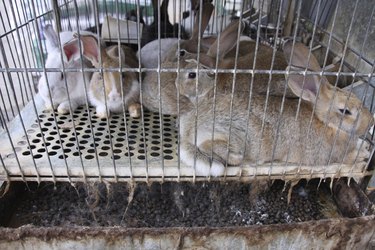
Dogs are like children in that they explore the world through their mouths. They taste and eat just about anything, including the feces of other animals. They will also eat the entire carcasses of birds or rabbits, including any forming feces that may happen to still be in the bodies. Dogs often like rolling about in animal droppings, too, but some serious illnesses can pass from bird or rabbit droppings to your dog.
Diseases to Worry About
Video of the Day
Dogs can pick up avian flu (H5N1) from the feces, meat or carcasses of infected birds. They can also pick up avian flu from being in contact with or eating the feces of contaminated cats. Dogs can get coccidiosis or leptospirosis from eating rabbit feces. In the case of leptospirosis, dogs can also be infected from ingesting the urine or eating the feces of rodents, skunks, possums or already-infected dogs.
Video of the Day
Dogs At Risk
Hunting dogs or dogs allowed to wander are far more likely to eat contaminated bird or rabbit droppings than house dogs or dogs kept on a lead or in a fenced yard. Although this doesn't completely eliminate the chances of infected birds, cats or rabbits passing by your property, it does cut down the dog's chances of getting sick.
Preventions and Solutions
Dogs can be vaccinated against leptospirosis as puppies and given annual booster shots. Dogs can be trained to not eat feces using the "leave it" command. A trainer or veterinarian can teach you how to use this command. You should bathe our dog as soon as you realize that he's rolled in animal droppings. Try to keep your dogs from coming into contact with stray cats, and try to keep them off of your property. Check your dog's yard frequently to see if any animal droppings are there and clean them up.
Warnings for Pet Owners
All of these diseases are transferable to humans. However, simple hand washing before meals or after getting into contact with a feces-covered dog or removing animal feces can often prevent your chances of getting sick.
Identification
A dog with avian flu has fever, coughing, difficulty breathing and difficulty walking. The dog needs to get to the vet immediately or they may die. A dog with leptospirosis has fever, vomiting, loss of appetite, disinterest in anything (depression), conjunctivitis and very dark colored urine. This is also an emergency situation and the dog needs to get to the vet immediately, if not sooner. Although dogs have survived leptospitosis, they often have kidney and liver damage as a result. Dogs with coccidosis get loose, runny stools, sometimes tinged with blood. They are listless, anemic and often get dehydrated.
Always check with your veterinarian before changing your pet’s diet, medication, or physical activity routines. This information is not a substitute for a vet’s opinion.