
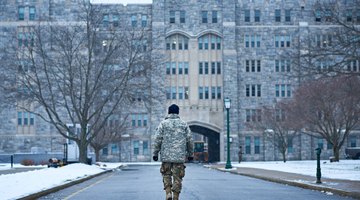


It’s not uncommon to hear people identify military school as a tool to cure bad behavior in young people, and once upon a time, that perception may have held true. Times change, however, and now that vision probably is entirely wrong. Today’s military school for kids can be a pathway to a career in the military or to admission to one of the nation’s prestigious military academies. It doesn’t matter why you’re interested in military school; one thing you need to learn as you look for the right school is, “How much does military school cost?”
Youth Military Academy
Military schools can be identified by the level of academic programming they offer: college preparatory programs for high-school aged students and college and university programs. They are usually private schools, which can make them differ from public schools in a number of ways. For starters, you can expect that the military school cost will be more than public schools–in some cases, it will cost considerably more. A day-school program can cost more than $10,000 per year in tuition alone, and room and board can run from $15,000 to $25,000 per year.
Military School Cost
Tuition is not the only cost associated with attending a military school. Some schools offer comprehensive pricing ($21,000 per semester covers tuition, room, board, activities), and in some cases, cadets will be required to purchase uniforms ($500 to $1,000 per year). Special classes can add to military school cost; band, piano and other arts classes may increase the cost of attending military school. Be aware from the start what is included in the price the school's officials are quoting you.
Features of Military School
While the curriculum may resemble those found in public schools in may ways, expectations for student behavior will be quite different. Because they are privately owned and operated, military schools adopt rules and regulations they deem appropriate for their cadets. In general, students/cadets can expect to find little tolerance for renegade behavior. In some cases military school for troubled teens is a recommendation to help them correct their behavior.
Benefits of Military School
Military schools stress certain values, including respect, teamwork and discipline. For this reason, you may find some special, enriched programs available to students in military school. Almost all of them offer a military program of some sort. Many programs have a band. It is not uncommon to find a religious component in the cadets’ training. And sports and other group activities are very important parts of the learning experience. Military school for kids can be a truly rewarding experience.
Financial Assistance for Military School
Clearly, military school for kids can be an expensive undertaking. Scholarships and financial aid can help offset the cost, and many schools offer a payment plan that will let you contribute a portion of the cost on a regular schedule. Once you have decided on the best school for your student, start looking for sources of funding. Begin with the school’s financial aid office or business office. Ask questions and follow up on every lead they give you.
Military School for Girls
It is not difficult to locate a military school that is available to men only, and co-educational schools run a close second. Military school for girls are much rarer, but they are out there.
Related Articles








Writer Bio
Colleen Morrison has been writing professionally for two decades. She holds an M.A. from the University of Wyoming and a Ph.D. in history from Arizona State University. She ghostwrites articles, blogs and Web content for her clients. Articles under her name appear at M&M, eHow, Golflink and other sites.