
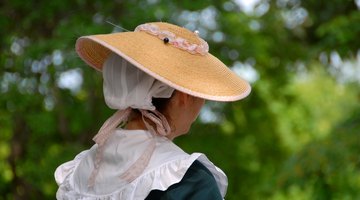


Colonial America families were busy. They had to continually work so that everything they used would get made and so they would have food to eat. They felt that it was important to educate their children, whether it was at school or home. After their family responsibilities were done, they made time for some fun as a family. They combined working toward a community goal, such as building a house, with a celebration afterwards.
The Facts
Colonial families often had several children and sometimes had aunts, uncles and grandparents living together. Colonist's time was mainly spent doing work. The females both young and old did household chores, including cooking, cleaning, milking cows and mending clothes. The males did everything from skilled trades to making the laws. Fathers and sons also hunted for meat. Each season there would be new jobs. During springtime geese would be plucked for making pillows and mattresses. Summer was time to harvest the fruit and vegetables. Autumn was when men and women butchered and smoked farm animals. Winter work was spinning wool for sewing new clothes and linens. They tried to make work enjoyable since they spent so much time working. They would get together to plow fields, sew quilts or build a house. They would eat together and sometimes dance when they were done. Wealthy colonists had slaves do the work while they read, played board games and danced. Learning to dance, especially for the southern colonies, was an important skill that was sometimes taught by traveling instructors. If families had enough money, they sent their kids to school. If they couldn't afford school, the boys could begin an apprenticeship as early as age 9 and the girls learned to sew. Early colonial houses usually were only one room with a fireplace for heating and cooking. Some families had some basic furniture such as a table and chairs. Family homes usually had a small plot of land for a few animals and a garden for the family's food.
Features
Early Colonists had some customs that were practical while others were for religious reasons. Children were taught that being lazy was a sin. No matter if they lived in towns or rural colonies they still were required to get up early to do chores. Good manners were also important. They used a book on manners to teach everyone. For early colonists, eating with their hands was considered good manners since forks were invented later. They ate off wooden plates, but thought it was too flamboyant to each have their own so they shared. Families listened to a minister teach them that dancing was a sin. But most enjoyed dancing and did it anyway. Families also didn't drink water or bath often. This was for more practical reasons though since they were not sure how clean the water was.
Time Frame
The Library of Congress website dates Colonial America starting in 1492 when Christopher Columbus discovered America. But Jamestown, Virginia, the first permanent colony wasn't founded until 1607. The Pilgrims later came in 1620 and founded Plymouth Massachusetts. It wasn't until 1720 that most of the East Coast of America was settled.
Geography
American colonial families lived in rural areas as well as bigger colonies with towns. The larger towns may have had taverns, small stores, and a meetinghouse. There eventually were 13 colonies all up and down the east coast of America: Connecticut, Delaware, Georgia, Maryland, Massachusetts, New Hampshire, New Jersey, New York, North Carolina, South Carolina, Pennsylvania, Rhode Island and Virginia.
Evolution
The first American colonists lived in caves they had dug or mud huts. They started living in one room log cabins once they learned how to build cabins. They later began building two story wood homes after they had the hand cut wood or wood from a sawmill that they needed. These homes were similar to what they left in England. Some homes even had several bedrooms, a smokehouse, a kitchen that was separate from the rest of the house and an outhouse. By the late 1700s, architects were used in bigger colonies for wealthy families.
Related Articles


Writer Bio
Tammy Forner is a freelance writer who has a proven record of producing a wide variety of material for large and small companies both online and off. Since 2008, Forner has managed three blogs, written for eHow and Associated Content, and copywritten material for clients. She holds a Bachelor of Arts degree in family life education from Spring Arbor University.