What Is Tenosynovitis?
A tendon is a cord that connects muscles to bones. They are covered with a sheath called the tenosynovium, which when inflamed results is a condition known as tenosynovitis. This can occur in any tendon that has one of these sheaths, but most frequently is seen in the hand, foot or wrist. Tenosynovitis can be dealt with in a number of ways, with surgery as the last option.
-
Types
-
The majority of instances of tenosynovitis are the result of people performing repetitive movements that eventually irritate and inflame tendon sheaths. While injuries, strains and infections can cause tenosynovitis, activities such as operating a computer, working an assembly line, running a cash register, sewing or playing a sport that requires repetitive movements are usually the root of the trouble. One type of the condition known as de Quervain's tenosynovitis involves the two main tendons in the wrist and lower portion of the thumb. Someone like a carpenter could be at risk by constantly using tools such as a hammer or drill.
Effects
-
Some of the signs and symptoms of tenosynovitis are joint pain and stiffness. Swollen joints are an indicator, so if you have a hard time moving a joint, it could mean that you have tenosynovitis. Sometimes a finger will get stuck in a bent position, a condition called trigger finger. In de Quervain's tenosynovitis, the wrist on the side of the thumb will hurt, and there can be stiffness and numbness in the region as well.
Prevention/Solution
-
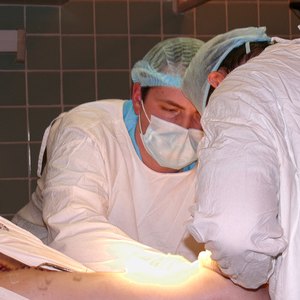
Your doctor will attempt to alleviate swelling and make the pain involved with tenosynovitis manageable so that the affected tendon can move easily through the sheath. Often the area will have to be immobilized for a time with some sort of brace or splint, allowing the tendon to rest. Stretching exercise can be helpful, and anti-inflammatory medications like Naproxen and Ibuprofen can take the swelling down. Injections of steroids into the actual sheath can offer relief, and if an infection is the culprit, you will be placed on antibiotics to fight it. Surgery to free up the tendon can be utilized in the most severe cases of tenosynovitis.
Considerations
-
If a repetitive movement is responsible for your bout of tenosynovitis, you will have to make some adjustments to avoid it from reoccurring. The most dramatic one would be to actually refrain from the movement, but this could mean a change in jobs for many people, which is not a practical solution. Taking regular breaks during the course of the activity can be of help. Your doctor can suggest exercises that can make it possible to keep the area mobile and loose.
Expert Insight
-
Guitar players and tennis players are at a high risk for tenosynovitis. The tennis career of England's Angela Buxton was ended by tenosynovitis. Buxton was an incredible junior talent, winning many titles. She won the doubles titles at both Wimbledon and the French Open in 1956, and climbed as high as number 5 in the world, but the pain brought on by her tenosynovitis effectively ended her career in 1957 at the young age of 22.
-