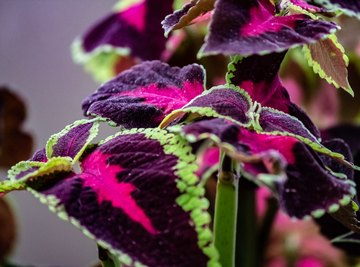

Though we often consider seeds to be the first stage of new plant life, seeds are only containers, and not all plants reproduce by using them. Like with animals, the foundations of new plant life have less to do with the container, be it an egg or a womb, and more to do with what's inside that container: the embryo. The embryo in plants, whether it's found in a seed or a bud, contains the early form of the organs the plant needs to live. When conditions are right, the embryo bursts out of its container and becomes a seedling – beginning the process of growing into an adult plant.
TL;DR (Too Long; Didn't Read)
TL;DR (Too Long; Didn't Read)
The plant embryo, sometimes called the seed embryo, is the part of a seed or bud that contains the earliest forms of a plant's roots, stem and leaves. The embryo develops after a fertilized adult plant flowers, and is generally contained within a seed or bud. It acts as a sort of "starter kit" for the plant: When conditions are right for the seed to grow, the embryo 'activates' and begins germination, eventually becoming a seedling when it grows out of its container.
Plant Embryo Development
When a plant is fertilized, its male and female cells form a zygote – a combined cell that can divide itself and grow into a new organism. That zygote will eventually form the plant embryo, which the parent plant protects by forming a container around it, whether it be a seed, a bud, a shoot or something similar, which is filled with endosperm – food that the embryo can use during the early stages of germination. When this container is subjected to the correct conditions, the embryo can then complete its function.
Plant Embryo Function
The plant embryo function is effectively as a sort of "starter kit" for the new plant's life: It contains the earliest forms of the plant's roots, leaves and stem, and is capable of sensing, often through the use of its container, whether the correct conditions for growth are present. When the embryo detects an adequate amount of water, oxygen and other minerals in its environment, it begins to consume the endosperm in its container in order for the new plant to start growing.
Seeds Into Plants
The first major step of plant growth is called germination. When the embryo in a container has grown enough, using water and oxygen from its environment and consuming endosperm for energy, it bursts out of its container. Roots begin form, and the new plant's stem and leaves push up out of the ground. Once it has burst from its container, the embryo is officially deemed a "seedling," and will grow into an adult plant.
References
- Kenyon College Biology: Plant Development
- University of Illinois Great Plant Escape: Plant Parts
- NC State University: Development and growth of plant embryos
- Tulane University: Gymnosperms and Angiosperms
- University of Arizona Backyard Gardener: What's in a Seed?
- Texas A&M University Wildflowers in Bloom: Seed Germination
- University of Maryland: Plant Growth and Development
- Encyclopaedia Britannica: Embryo formation
- Science Learning Hub: Flowering plant life cycles
About the Author
Blake Flournoy is a writer, reporter, and researcher based out of Baltimore, MD. Working independently and alongside professors at Goucher College, they have produced and taught a number of educational programs and workshops for high school and college students in the Baltimore area, finding new ways to connect students to biology, psychology, and statistics. They have never seen Seinfeld and are deathly scared of wasps.