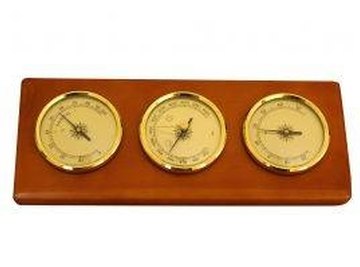

Barometric pressure, also known as atmospheric pressure, is a term used to describe the measure of the amount of atmospheric weight pressing down upon a certain point on the Earth's surface. Barometric pressure takes its name from the barometer, which is a device that is used to measure the atmospheric pressure in an area. The amount of atmosphere in place over a certain area differs depending on the elevation of that point, so barometers are calibrated to show readings based on what the barometric pressure would be for that point, if it were at sea level.
There are several different types of weather phenomena that are associated with a fall in barometric pressure. One weather system that results in lower barometric pressure is a low pressure trough, which is a long area of low barometric pressure. In a low pressure trough, warm air rises, and cools as it goes higher into the atmosphere. The space left behind as the portions of a warm air mass rise are filled by additional warm air, which exerts less pressure on the earth, resulting in a lower barometric pressure reading. When a low pressure trough comes into an area, or deepens, indicating lower levels of barometric pressure in the center, the atmospheric pressure in that area will fall in response to the warm air masses overhead.
In addition to low pressure troughs, wind can also contribute to a fall in air pressure. When the wind blows moist air into an area, the air pressure in that area will drop in response to the change. This phenomenon is called moisture advection, and results from the fact that moist air has a lower density that dry air, and results in less pressure on the earth's surface. Warm air advection is a similar phenomenon that can also cause lower air pressure. When warm air, which is less dense than cold air, is pushed into an area by wind, the barometric pressure in that area will fall.
References
About the Author
Vee Enne is a U.S. Military Veteran who has been writing professionally since 1993. She writes for Demand Studios in many categories, but prefers health and computer topics. Enne has an associate's degree in information systems, and a bachelor's degree in information technology (IT) from Golden Gate University.
Photo Credits
sxc.hu/tuareg