
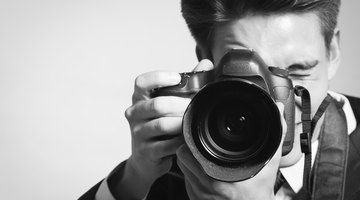

Photographers can take many paths to their chosen career, from pursuing a degree in journalism to becoming a news photographer to gaining a strong local reputation as a creative headshot photographer. No two photographers' days will look exactly the same, however, most photographers share at least a few duties they must complete each day.
Working With Clients
Many, though not all, photographers are freelance contractors whom individual clients hire to capture weddings, family events, portraits or business functions. For these self-employed photographers, working with clients -- including billing, sending emails, recruiting new clients, marketing and scheduling -- makes up a portion of every day. For photographers who are employed by businesses, these duties are replaced by common employee duties, such as creative meetings, discussions about upcoming shoots and supervising interns or entry-level photographers. A sports photographer for a local newspaper, for example, may spend time researching sports events and coordinating with her editor to determine which events she will photograph.
Researching and Setting Up Shots
Professional photographers don't land amazing shots with just one lucky click. They painstakingly set up the perfect shot, and what this means varies from photographer to photographer. Wedding photographers, for example, travel to wedding venues to determine how to most attractively photograph the couple. They may also shoot test shots with props to ensure they turn out well. For a newspaper photojournalist, by contrast, this process might include researching news events and determining the best angle from which to capture upcoming protests, political speeches or other important events. A photographer capturing scientific images may need to do research on the scientific concepts the images support or learn how to safely handle substances he intends to photograph.
Capturing Images
The most obvious part of a photographer's day requires her to capture images. This means not only shooting photos, but also selecting the right lens, giving instructions to subjects on how to pose and determining the best lighting for a shoot. For some photographers, this portion of the job requires significant planning and security. A wildlife photographer capturing shots in a dangerous area riddled with poachers or overtaken by local conflicts, for example, may need the assistance of a local guide, protective clothing or a bodyguard.
Culling and Editing
No matter how good a photographer is, some shots will be blurry, out of focus or otherwise undesirable. Culling these images is the first step toward editing the best photos. After a photographer removes the useless images, he must then edit images, cropping out unimportant details, sharpening lines or editing out wrinkles or blemishes. Fashion photographers who shoot glamorous images for special occasions often spend much more time editing, since their clients may ask them to add in art or remove certain elements of the photo.
Related Articles





References
Writer Bio
Van Thompson is an attorney and writer. A former martial arts instructor, he holds bachelor's degrees in music and computer science from Westchester University, and a juris doctor from Georgia State University. He is the recipient of numerous writing awards, including a 2009 CALI Legal Writing Award.