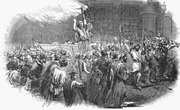

Crime and the criminals that commit them are often glorified in video games, movies and music. Typically, crime is kept under control by processes of the law and law enforcement which are normally viewed as the force convicting people of committing crimes. Most Americans have been exposed to some form of crime in their lifetime through the media or on a personal level. This glorification of crimes has a profound effect on society's view of crime. There is often a certain level of desensitization in communities because of frequent crimes and a media saturated with crime reports. Additional effects of crime on communities involve high social and economic costs due to increased levels of victims and a need for greater security.
Function
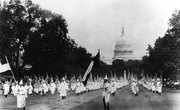
Criminal activities are a part of every aspect of society from targeting demographics to controlling communities. In the early 1900s, the Ku Klux Klan began a series of lynchings to keep mental and physical control over the recently-freed black population. The rise of the Italian mafia in the early 1900s, also served to control neighborhoods and stimulate gigantic profit for those involved and in charge of mob operations. However, some societal crimes aren't as obvious or condemned, such as traffic violations or "soft drug" uses such as marijuana.
Misconceptions
A common misconception is that only certain populations commit criminal actions. However, crimes are not committed solely by any single race of people or class of people. People of all ethnicities, races and backgrounds have committed illegal acts throughout time. The significance of these behaviors and the ever-present criminals who perpetrate them, are felt by everyone in society, not just the perpetrators and victims.
Significance
Besides the obvious unrest experienced in communities, criminal activities are also felt in the pockets of tax payers. New prisons and jails, programs for criminals and money for more police protection all come directly and indirectly out of the pocket of American taxpayers. Some neighborhoods begin neighborhood watches to identify or prevent crimes with parents also changing the way their children play outside due to fear of heavy criminal activities. In areas where crime is prevalent, residents may also notice direct effects in terms of depreciated housing, education levels and job availability in the surrounding economy and community.
Considerations
Numerous government studies have shown clear links between poverty and increased crime levels. These studies show that people exposed to extreme poverty and the inherent challenges are more likely to commit crimes. This has further led to stereotypes that inhibit societal progression between races and cultures. Cases of police traffic stops have also suggested that minorities are stopped more frequently due to the aforementioned reason, leading to laws to try and counter these practices of profiling.