Organic sedimentary rocks are one of three kinds of sedimentary rocks; the other two types are clastic and chemical. While clastic sedimentary rocks are made of sediment types of varying size and composition, chemical sedimentary rocks are made of minerals that precipitate from solution. Organic sedimentary rocks are composed of organic materials that were once living organisms.
The Basic Rock Cycle
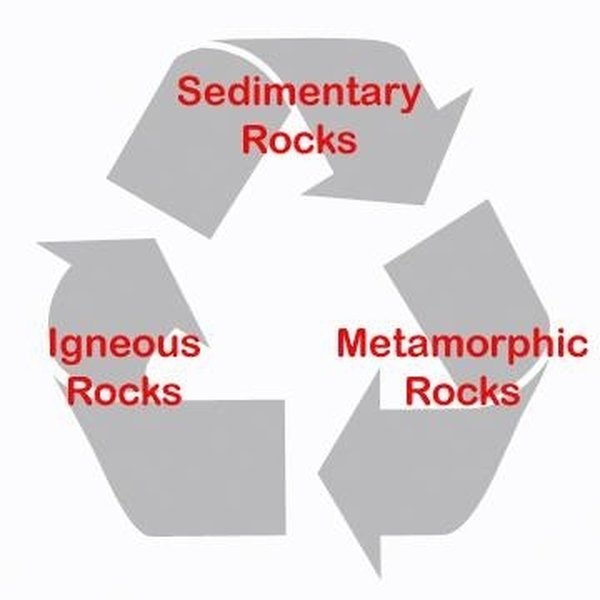
There are three rock types that make up the Earth: metamorphic, igneous and sedimentary. As the Earth renews its crust, the sedimentary rocks become metamorphic and the metamorphic rocks become igneous. The igneous rocks can be broken up into sediments that then make them a part of the sedimentary classification of rocks.
Introduction to Organic Sedimentary Rocks
Organic sedimentary rocks are just one of three types of sedimentary rocks. This type of sedimentary rock must have organic material – material that was once part of a living organism – to be created. They are called organic because they are made from organic material such as grass or plankton that, over long periods of time, becomes a type of sedimentary rock.
This organic material can be the organism itself or may be given off from the organism. An example of this is coral, which may eventually become limestone with the right pressure and temperature.
Organic sedimentary rocks can give us a record of what happened in the area they are found in. Because they are made up of organic material, they can tell us what plants lived and died in that area. The location in which the sedimentary rock is found can also tell us what time period the plants were growing in that region or an approximate duration of time in which the organic sedimentary layer was created.
Generally speaking, the lower the depth of the sedimentary rock layer, the older it is. The older the organic sedimentary rock is, the more pressure and temperature increases it has most likely gone through.
The Organic Sedimentary Rock Process
Organic sedimentary rocks are formed under varying degrees of pressure and temperature over long periods of time. More pressure and an increase in temperature will form different types of organic sedimentary rocks.
When organic material is broken down it becomes peat. Peat is the first step in the organic sedimentary rock process, and is found in bogs, swamps and wetlands. Peat is used as a fuel for cooking and heating in places like Ireland and Scotland; it is harvested and dried for this purpose. As more earth accumulates over the peat and causes the peat to come under greater pressure and a higher temperature, then lignite is formed, another type of organic sedimentary rock.
After the lignite is formed it begins to undergo a similar process as the peat. More pressure is applied to the lignite and the temperature becomes hotter resulting in the formation of bituminous coal. Bituminous coal then becomes anthracite coal as its temperature and pressure increases. Coal is created under swampy conditions that are not commonly found in our era because it needs higher sea levels to help it form.
Coal is an important organic sedimentary rock because it is used all over the world as a fuel for such things as heating our homes. While coal does eventually accumulate, the time it takes for this process to occur is not practical to rely on, as it could take millions of years for the sedimentary rock to form. This is why we refer to coal as a fossil fuel. The next time you hear coal spoken of you will understand what it took to for that sedimentary rock to be made so that it could be used as fuel.
References
Photo Credits
M. Kaye Hash