Although more often associated with hook bait, minnows are popular fish for ponds and even aquarium tanks. Hardier than most fish and helpful with timid schools, minnows need relatively little care. The care is mostly the same across the various minnow species. Provide live plants, shallow caves of rocks or pottery, and plenty of other minnows to shoal with to promote a happy school.
Tips
Minnows are omnivorous; they will eat plankton and algae, blanched vegetables, baby brine shrimp and live insect larvae.
Most Common Types of Pet Minnows
White Cloud Mountain Minnows
White cloud mountain minnows are rarely spotted in the wild, but they are popular tank and pond pets. Their look is similar to that of the neon tetra; as a result, they are sometimes incorrectly sold as such. These minnows get no bigger than 1.5 inches. You can identify them by their bright red _caudal fin_s, or tail fins. As they are relatively calm and peaceful in nature, you can keep a school on their own, or you can keep them with other species of fish.
Fatheads
Reaching 2 to 3 inches in length, fathead minnows are so called due to the black fleshy pads that appear on the heads of males during breeding time. Fatheads are silver to dark-olive in color, with pale underbellies and two dark stripes that darken during mating: a dorsal stripe and a lateral stripe. They tend to group in schools until breeding time, when they separate into pairs until the fry are born.
In the wild, fathead minnows inhabit rivers and streams, as well as muddy pools. Fathead minnows are sturdy little fish, able to withstand high variances in temperature, turbidity, pH and salinity levels, and oxygen. This makes them excellent options for outdoor pond raising.
Rosy Reds
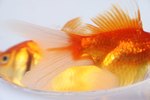
Rosy red minnows are actually a variant of fatheads. Bright orange to dusky red in color, they stand out from their darker cousins and are a beautiful addition to aquariums. Fatheads and rosy reds prefer open space to school, and they like to breed in caves or overhangs.
Most rosy red minnows are found at pet stores or aquariums, kept in dense schools. These fish may prove stunted or unhealthy from their pet store conditions, but the fry they produce should have better coloration and size if you care for them attentively.
Tips
The fat pad on the top of the heads of male fathead minnows secretes an anti-fungal substance that a breeding male will rub over the eggs.
Aquarium Care
Because minnows are schooling fish, it's best to keep them in group of mated pairs. Four or five adult pairs will fit comfortably in a 15-gallon aquarium. Providing gravel and aquarium ferns will help make your fish happier and aesthetically improve your aquarium setting. Install cavelike objects such as pottery, freshwater rock or nontoxic aquarium pieces to encourage your minnows to mate and breed.
A simple sponge filter is enough for filtration. Add an air supply for oxygenation. Feed your minnows once a day, and keep the temperature between 64 degrees and 79 degrees Fahrenheit. Above all, pay attention to your fish. If they are lethargic or sickly, contact your local aquatic specialist.
Pond Care
Raising minnows in a pond is not very different from aquarium care. A benefit to ponds is the use of live local plant matter for a dietary staple and free-ranging insects to serve as snacks. It's best if your pond is away from places where leaves or debris can easily foul it.
If you fill your pond with water from a garden hose, add water conditioners to the pond at least three days before adding your first minnows. Add screens to keep your fish safe from predatory land animals and to prevent escape artists from leaping onto land. It's not necessary to filter or aerate your pond unless you stock hundreds of fish, although a small fountain or water wheel can prevent a pond from becoming stagnant.
Whether you raise your minnows in their own independent schools, or combine them with other shoals, these gentle species are hardy, helpful and relatively easy fish to maintain.