Waterbirds
The birds that live on or near water have adapted to be able to find food during the entire year. Saltwater birds such as gulls and terns live on the small fish they are able to capture and by being scavengers. They will eat the leftovers they find almost anywhere within the range of their habitat. The bald eagle subsists mainly on fish and carrion, catching its own meal with its sharp talons or eating from the carcasses of dead animals. The osprey--the only North American bird of prey that will actually dive into the water--uses its superior eyesight to spot fish while flying and then swoops into the water after them. One common trait that nearly all birds share is excellent eyesight, which allows them to see a potential meal from a distance before they are spotted. Water birds such as herons, cranes, ducks, loons, geese, grebes, and coots dine on combinations of water bugs, aquatic vegetation, small fish, invertebrates, frogs, seeds, grains and nuts. However, these species must fly to warmer climates in the winter to be able to eat since they depend on finding open water where their main food sources may thrive.
Birds of Prey
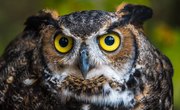
Owls are a species of birds known as birds of prey. They hunt mostly at night and kill small mammals such as moles, voles, mice and rabbits. Owls will also eat other birds, using their sharp claws and beaks to kill them after swooping down upon them. Hawks, harriers, kites, and falcons will eat much the same type of creatures that owls do. All birds of prey have acute vision which they use to find a meal while they are either in the sky flying or perched somewhere. Once a target is spotted, the bird will plunge down and snatch up the usually unsuspecting animal and carry it off where it will use its equally strong beak to tear it to bits before devouring it.
Summer and Winter
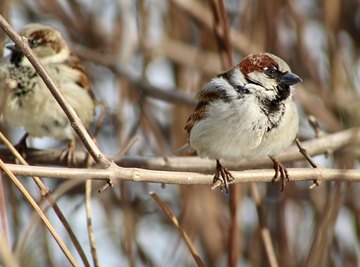
During the summer, food is plentiful for every bird species. Some, like the robin, will eat earthworms and grubs that they find in and on the ground. Birds such as chickadees and nuthatches have no problem finding the various insects that they eat or such items as berries. Most songbirds will have a warm-weather diet that includes insects and seeds along with things like berries and buds. It is in the winter months that birds have a difficult time finding enough food to eat. Species that depend solely on insects such as barn swallows and martins are forced to head far enough south where they can continue to find and feed on insects. Birds like the cardinal and the blue jay will not head south when the cold weather approaches. These birds will eat whatever they can find and then digest in the winter, including seeds, nuts, and dried berries and fruits. In places where winters are severe, many species have learned to survive by depending on people who have bird feeders where seeds are plentiful. Omnivorous birds, which include the crow and the raven, will get by eating a combination of carrion, mice and other things, including garbage.
Resources
About the Author
John Lindell has written articles for "The Greyhound Review" and various other online publications. A Connecticut native, his work specializes in sports, fishing and nature. Lindell worked in greyhound racing for 25 years.