Cat lice is an uncommon parasitic infection specific to cats. The lice feed on a cat's blood and dried skin. They cause itchiness, leading to skin infections if left untreated. Fortunately, they are easy to get rid of using a cat lice treatment, such as a topical insecticide. Your veterinarian will advise which treatment will work best for your cat based on their age, their temperament, and the extent of the infestation.
Video of the Day
What is cat lice?
The type of lice that affects cats is Felicola subrostrata — tiny, flightless parasites that live in the fur and on the skin of cats. Lice infections are generally not zoonotic, meaning that feline lice cannot infect humans and vice versa, that human lice will not infect felines. Pet parents should know that cat lice are transmitted through direct contact with an infected cat or through indirect contact with bedding or grooming tools. Cat lice can negatively affect a cat's health, causing intense itching, hair loss, a dry and matted coat, and anemia in severe infestations.
Video of the Day
Identifying cat lice
Lice are visible to the naked eye. You may see lightly colored bugs in your cat's hair and their eggs on your cat's skin and coat. Your cat may scratch, lick, bite, or rub the infected area. There may also be fur loss or matting. Your veterinarian will thoroughly examine your cat, looking for evidence of lice or nits (lice eggs) in the fur.
Treatment options for cat lice
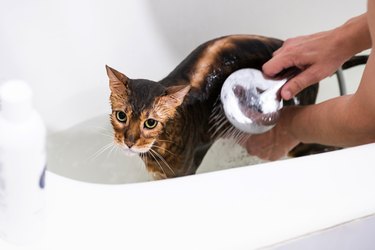
Once your veterinarian has diagnosed cat lice, they will recommend the most suitable treatment. There are various effective treatments for cat lice, including shampoos, sprays, and powders. There are no recommended home remedies for cat lice. If your cat is long-haired or if your cat's fur has become matted, it may be necessary to shave them before treatment.
Pyrethrin insecticide treatment
One of the most common treatments for feline lice is a shampoo that contains pyrethrin. Cats are extremely sensitive to this pesticide, so never use any pyrethrin product without veterinary supervision and advice.
Pyrethrin-based shampoo is helpful in cases of severe infestations, as it will immediately remove all adult lice from the coat. After using the shampoo, your veterinarian may advise applying a cat lice spray or powder to the fur to kill the remaining lice.
Typically, it is advised to repeat bathing and treatment within 10 to 14 days. This is because the life cycle of a louse is 21 days, and pyrethrin does not kill lice eggs. Occasionally, two or three treatments are required to effectively eliminate all cat lice and eggs.
Lime sulfur dip
Lime sulfur dips performed every two weeks kill adult lice, nymphs, and larvae. Although smelly and messy, dips work best for kittens because pyrethrin products may be unsafe for those younger than 12 weeks of age. You may need to repeat the treatment three or four times for full efficacy.
Apply the solution all over your cat and allow it to dry naturally. An Elizabethan collar may be necessary to prevent your kitten from licking the dip until their fur dries.
Topical lice treatment for cats
Topical insecticides, including selamectin, fipronil, and imidacloprid, are effective against cat lice. These spot-on medications are applied between your cat's shoulder blades. While topical treatments with these products should usually be performed monthly, four treatments every two weeks are required to treat lice infestation. This ensures that the products effectively kill successive generations of lice until they have gone.
These products are easy to apply, making them a good choice for cats intolerant of bathing, but they may not be safe for young kittens. Always consult your veterinarian before treating your kitten for lice.
Prevention of cat lice
If one of your cats has lice, you must treat all cats in your home for lice to prevent their spread. You also need to disinfect the cat's living environment. Wash your cat's bedding in hot water and replace items you cannot wash or disinfect, including grooming equipment. Steam-clean carpets and furniture where your cat spends time. A fogger may be helpful to treat your home if your cat has a severe lice infestation.
The bottom line
Cat lice are parasites that can cause itching and discomfort for cats. They are highly contagious among cats but do not infect humans or other pets. If you think your cat has lice, seek advice from your DVM (veterinarian). Once your cat has been treated, thoroughly clean their living area, bedding, toys, and grooming equipment to prevent reinfection.