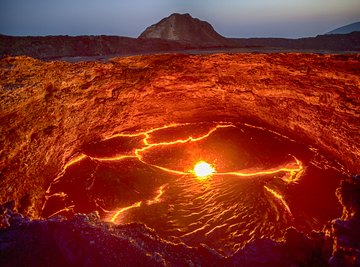

The layer that surrounds the core (the center of the earth) is called the mantle. The layers above it are the crust and then the atmosphere, which the layer that is habitable by human life. The crust is the dirt just beneath the surface.
Elements in mantle
The mantle consists of many minerals (metals) and basic elements, which include iron, magnesium, aluminum, and silicon
Inner Mantle
The inner mantle begins about 200-2000 miles below the Earth's surface, depending on where you are. The high pressure of the gas and elements in the mantle make most of it a hard solid.
Outer Mantle
The outer mantle is about 7-200 miles below the earth's surface. It consists of solid rock and is between 2500 and 5400 degrees Fahrenheit.
Effects of Mantle
The mantle is what creates volcanoes, earthquakes, and the shifting of the tectonic plates just below the earth's surface. This is what causes continents to slowly shift throughout history.
Layers of Mantle
The Asthenosphere, the hard liquid part of the mantle, and the Lithosphere, a stiff part of the outer mantle and crust, are what causes disturbances in the ground. The Lithosphere floats on top of the Asthenosphere to make the tectonic plates shift.
Resources
About the Author
Kelsey Childress runs a freelance creative business called Awen Creative that specializes in SEO Web content, social media marketing and blogging. She has been writing for online and in-print publications for over six years, and has a bachelor's degree in English literature and creative writing from Kansas State University.