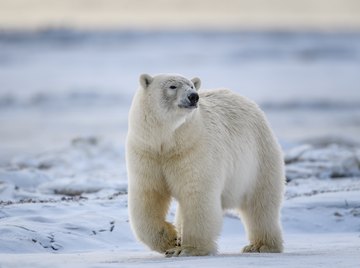
Polar bears are not only a favorite attraction for many at the zoo, they're also a great topic for kids to learn about. Describing a polar bear's size, diet, family life and habitat are all basic but important facts for kids to know about this mammal.
Body
There are many important and interesting facts about a polar bear's size and body to share with kids. For example, tell your child that a male polar bear can grow to be 10 feet tall and weigh more than 1,400 pounds. Females grow to about 7 feet tall and weigh up to 650 pounds. Explain to children that a polar bear's fur isn't actually white; each hair is just a clear, hallow tube that looks white because it reflects the light. Describe how a polar bear's front paws have webbed toes that help the animal swim through the water.
Diet
A polar bear's diet highlights some important facts for kids. Explain that the bear is a carnivore and primarily eats seals. Describe how the polar bear will silently wait by a seal's breathing hole in the ice, and how it will snatch its meal as soon as the seal comes up for air. Tell children that polar bears have also been known to eat other animals, including walrus, beluga whales and birds. This information is appropriate for older kids, as it may scare young children.
Family
A polar bear's breeding and social habits showcase important facts about the animal. Explain to children that female polar bears start having babies around 4 or 5 years old. Highlight that each litter usually has one or two cubs, which are born in a cave dug out from a snow drift. Describe that when baby polar bears are born, they're about the size of a rat; however, they can grow to the size of a man in just one year if they have enough food. Depending on your kid's age, you might share with her that polar bears are usually solitary animals once they're adults, and that they only come together to mate.
Habitat and Threats
The polar bears' habitat lends some important facts for kids and also highlights some vital information about threats to the mammals. Tell children that polar bears live across the Arctic, Alaska, Canada, Russia, Norway and Greenland. Describe how man is mining for oil and coal in these regions, which makes less space for polar bears to live. Let children know that many organizations, like the Defenders of Wildlife, think that climate change is melting the polar bears' habitat and making it harder for the animals to find food. Some believe if this climate change continues, polar bears might be extinct by 2050.