One of the easiest ways to keep tabs on your dog's health is to pay attention to their poop. The amount, color, and texture can indicate possible health issues. If you see a noticeable change in your dog's feces, it's time to see your veterinarian.
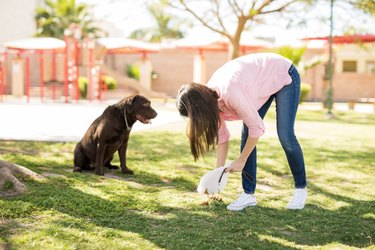
Why does my dog have solid stool with mucus?
Small amounts of mucus, which can include yellow mucus, clear mucus, or a variety of other colors, seen occasionally in dog poop is not usually cause for alarm. Some mucus is a natural intestinal lubrication produced in your dog's intestines. However, if the mucus is suddenly very frequent or excessive, contact your veterinarian.
Video of the Day
Video of the Day
Mucus that is not a result of your dog's normal intestinal tract lubrication can originate from colitis or inflammatory bowel disease among other gastrointestinal conditions. If you notice a large amount of blood or black, tarry stool, take your dog to your veterinarian or a pet emergency hospital immediately. Otherwise, as long as there are no other signs besides mucus, it might be OK to wait a day or so to see if it resolves on its own.
Dog stress colitis and poop
Any change in a dog's routine can cause stress. This might mean anything from house guests to a recent move or even a new food. If your dog is stressed, you might notice a small amount of bright red blood, known as "frank blood," and mucus in their stool. Stress can weaken your dog's immune system, leading to inflammation in the colon.
Luckily, stress colitis can be treated with supportive care, such as a bland or special prescription diet, fiber supplementation to benefit the gastrointestinal tract, medications to help resolve the colitis, and avoiding situations that might further stress your pet.
Inflammatory bowel syndrome in dogs
Dogs can also have mucus in their stool as a result of inflammatory bowel syndrome, also referred to as irritable bowel syndrome, which is frequently caused by food intolerance.
Your veterinarian might recommend bloodwork, X-rays, and abdominal ultrasound to rule out other causes and a strict trial of a specially formulated diet to determine if your dog's current diet is the culprit. If that doesn't reduce the mucus and any other signs, they might recommend endoscopy and biopsies of the stomach and intestines. If inflammation persists, they might also prescribe a course of steroids, such as prednisone.
Dog diarrhea with mucus
Softer stools or diarrhea with larger amounts of mucus could be a sign of a health issue, such as intestinal parasites, stress colitis, or bacterial overgrowth. Schedule a visit with your veterinarian to get to the bottom of your pet's poop problem.
If your dog has been having diarrhea with excessive mucus along with sustained flatulence, behavior changes, or lethargy, this is even more cause for concern, and a more urgent trip to the veterinarian is in order. Make sure to tell your veterinarian if your dog is also straining to defecate, has bloody mucus, or has experienced significant weight loss.
Intestinal parasites in dogs
Intestinal parasites, such as tapeworms, whipworms, and giardia, are some common causes of abnormalities in dog stool. It's important to deworm your dog on a regular basis. A great way to do this is to ask your veterinarian to recommend a monthly combination preventative that provides convenient and reliable protection against heartworm, fleas and ticks, and intestinal parasites.
If you suspect that your dog might have mucus in their poop that is related to intestinal parasites, you can bring a fecal sample to your veterinarian. Once a parasite is identified via a stool sample, they can tailor specific medications to eradicate the parasite.
Intestinal bacterial overgrowth in dogs
While the small intestines need bacteria to function properly, in some cases, this bacteria might grow out of control, a condition known as small intestinal bacterial overgrowth, or SIBO. When this happens, it can damage the intestinal lining. This will often lead to malabsorption, the inability to absorb nutrients from digested food. Repeated episodes of diarrhea, especially if it contains mucus or fat, and weight loss despite a good appetite are hallmark signs of the disorder.
SIBO can be associated with another significant health issue, exocrine pancreatic insufficiency, which is prevalent in certain breeds, like German shepherds. Although this is one potential cause, many cases of SIBO have an unknown origin. Easing the symptoms often requires aggressive treatment, like extended courses of oral antibiotics and a dietary change to a low carbohydrate dog food. The veterinarian might also recommend adding probiotics to your dog's diet.
The bottom line
While mucus in your dog's stool can be a normal occurrence, it's important to stay vigilant about your dog's health. This includes monitoring their bowel movements for any significant changes, such as excessive mucus or bloody mucus. Excessive or bloody mucus can indicate health problems ranging from stress colitis to intestinal tumors. Dog owners should take their pet to their DVM if they have any concerns about their stool.