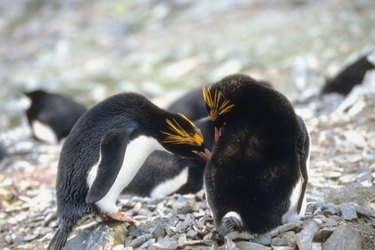
Macaroni penguins inhabit a number of islands in the Antarctic and sub-Antarctic regions, including Crozet, Kerguelen and the McDonald Islands. While Macaroni penguins are not an endangered species, they are considered highly vulnerable since their population has decreased as of the beginning of the 21st century. In addition to predatory animals, such as sea lions and leopard seals, Macaroni penguins are also threatened by commercial fishing and oil pollution.
Appearance
Video of the Day
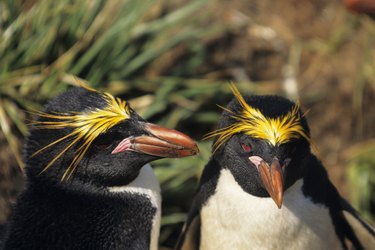
Macaroni penguins are frequently confused with Royal penguins, which are also black-and-white. The face of a Macaroni penguin is primarily black unlike the distinctly white faces of Royal penguins. Another distinguishing characteristic of Macaroni penguins are the yellow or orange tassels that adorn their faces. Macaroni penguins are, on average, between 20 and 28 inches tall and weigh around 11 pounds. Their beaks are brown and red in color.
Video of the Day
Name
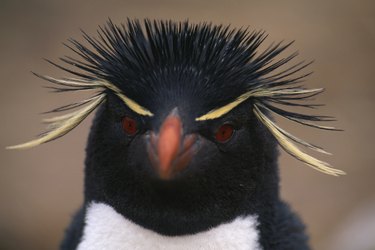
While their scientific name is Eudyptes chrysolophus, most people affectionately refer to this type of penguin as Macaroni. The name "Macaroni penguin" originated as a reference to the hats worn in the 18th century by young men in England called "Macaronis." The tassels on a Macaroni penguin's face reminded English explorers of the hats and the name stuck. The feathers and appearance of the penguins were referenced once again in the song "Yankee Doodle"; Yankee Doodle stuck a feather in his hat and called it "Macaroni."
Breeding
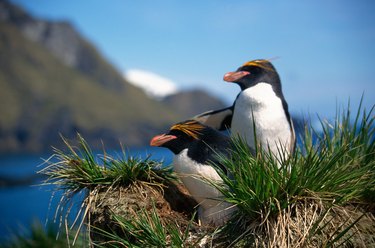
Macaroni penguins usually lay their eggs in small nests built with pebbles and mud, but some penguins lay their eggs on solid rock. Macaroni penguins lay two eggs at a time, although only one egg usually survives the incubation period. Breeding season occurs during the summer months and both parents take turns sitting on the eggs. A Macaroni penguin egg typically hatches in 34 days.
Food
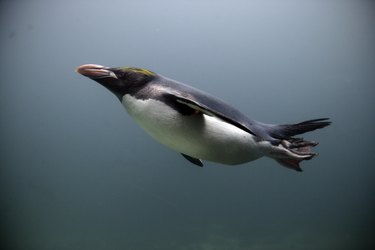
Macaroni penguins primarily eat squid, krill and small fish, although they will eat any type of ocean meat if necessary. Macaroni penguins are excellent hunters and are quick and agile. They also have excellent eyesight which only increases their hunting skill. Each year, Macaroni penguins lose their feathers and grow new ones. During this process, which is called molting, Macaroni penguins do not eat. Without their feathers for protection, Macaroni penguins would freeze in the chilly waters. As a result, Macaroni penguins patiently wait for their new feathers to grow before hunting again.